
November 18, 2024
Photography Keeps the Work Honest
Wildlife and bird photography sharpen the same instincts I bring to engineering leadership.
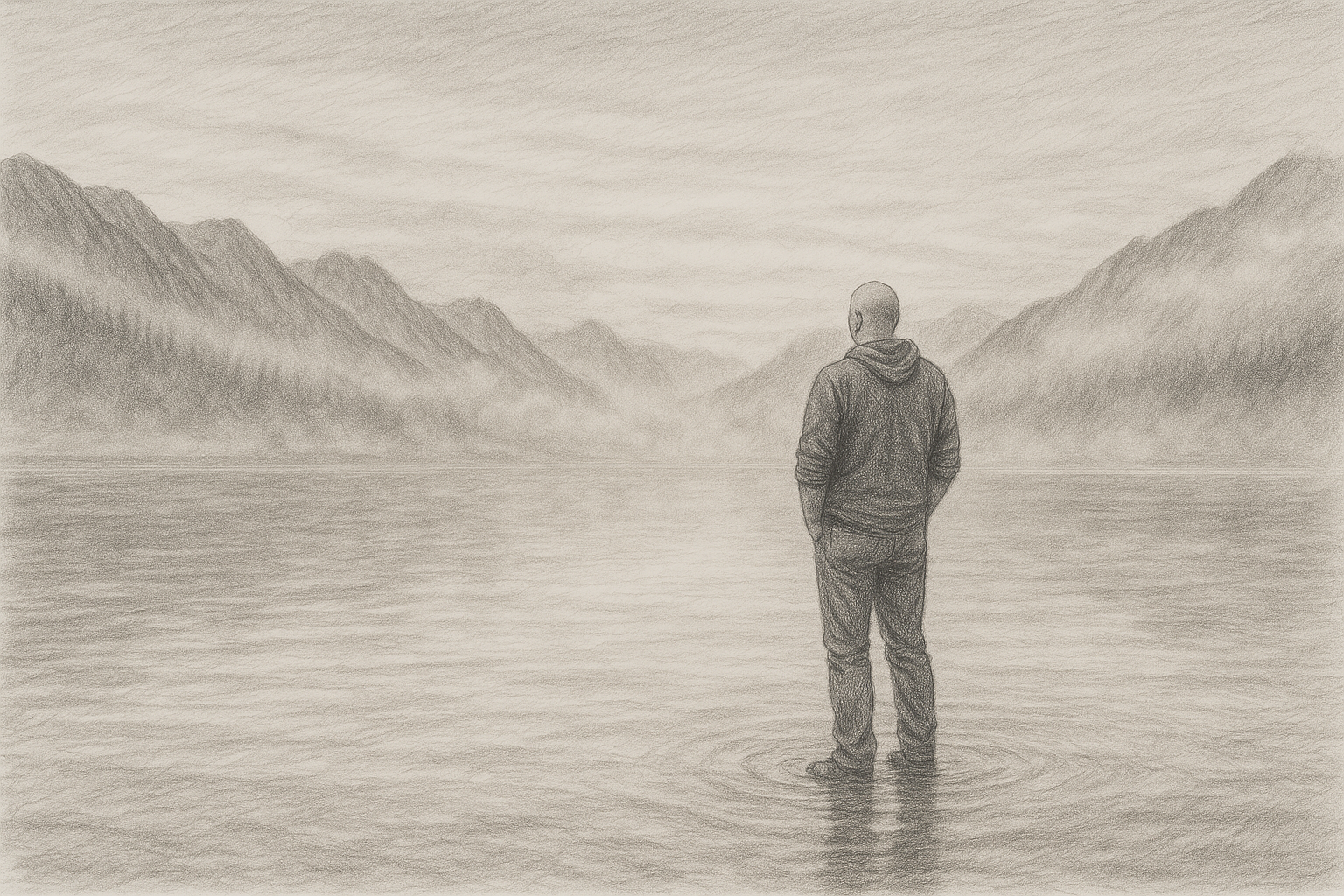
At 5 AM in Alaska's Lake Clark National Park, standing in chest waders at the edge of a tidal flat, I'm watching a coastal brown bear work the salmon run about sixty yards away. My camera is ready but not raised. The bear knows I'm here — they always know — but we've established something over the past hour: I'm not a threat, not interesting, not worth the calories it would take to deal with me.
This is the part that's hard to explain to people who don't do this kind of photography. The shot matters, yes. Getting the light right, anticipating the moment, having the technical skills to capture something real. All of that matters.
But the shot comes at the end of a much longer process. The process is patience. Presence. The willingness to be uncomfortable for hours — cold, tired, exposed — without any guarantee that the moment you're waiting for will ever arrive.
I've spent a lot of time thinking about why this practice has become so essential to me, why I keep returning to remote locations and brutal conditions for the chance at images that might never come. And what I've realized is this: photography keeps me honest in ways that matter far beyond the frame.
The Discipline of Waiting
In my professional life, I'm surrounded by urgency. Everything is time-sensitive. Every decision has downstream consequences that someone is waiting on. The default mode is motion — keep moving, keep deciding, keep pushing toward whatever outcome you've defined as success.
There's value in that urgency. Things get built. Progress happens. But there's also a trap: you start to believe that motion itself is progress. That activity equals impact. That the right response to uncertainty is always to do something, even if you're not sure what.
Wildlife photography is the antidote.
You cannot rush tides. You cannot ask migrating flocks to hold position for better light. You cannot make a grizzly bear do anything — and if you try, you'll learn very quickly how small you are in the order of things.
The only thing you can control is yourself. Your position. Your readiness. Your ability to wait, hour after hour, fully present and fully prepared for a moment that may never come.
This discipline transfers directly to leadership. The best decisions I've made weren't the fastest ones — they were the ones where I had the patience to wait for clarity. Where I resisted the pressure to act before understanding. Where I trusted that being ready was more important than being first.
Reading the Environment
Before I raise my camera, I'm reading everything around me. Wind direction, light quality, animal behavior, terrain, tides. Not consciously cataloging these things, but absorbing them — building a mental model of the situation that tells me where the opportunity might emerge.
Is the bear moving upstream or down? How long until the light shifts from harsh to golden? What's the escape route if something goes wrong?
This is the same cognitive work that happens in leadership, though we use different vocabulary. Reading a room. Understanding organizational dynamics. Sensing when a project is off-track before the metrics confirm it. Knowing when someone on your team is struggling before they tell you.
The skill isn't analysis. It's presence. Paying attention with enough depth that patterns emerge before they become obvious. Staying curious about the environment instead of assuming you already understand it.
I think this practice has made me more attentive in professional settings too — though it's hard to prove causation. What I can say is that the habit of watching before acting, of absorbing before deciding, transfers. It's the same muscle whether you're reading a tidal flat or reading a room.
The Moment of Decision
And then, suddenly, everything changes.
The bear looks up. The light catches the water on its face just right. The salmon in its mouth is still fighting. You have maybe two seconds before the moment dissolves into something ordinary.
This is where all the waiting pays off. Not because you get lucky — though luck plays its part — but because you've done the work to be ready. Your settings are dialed in. Your position is considered. Your instincts have been trained by a thousand previous moments that didn't quite come together.
The technical execution is almost automatic. The real skill was getting yourself to this point, in this position, at this moment, with the capacity to respond.
Leadership works the same way. The high-stakes decisions — the ones that define careers and companies — don't arrive with warning. They emerge from ordinary moments that suddenly become pivotal. The preparation that matters happens long before anyone realizes a decision is needed.
The few decisions I've gotten really right didn't feel like decisions at the time. They felt like recognition — like finally seeing clearly what had been there all along. The actual deciding happened earlier, in the accumulated patience that made clarity possible.
Mentorship and the Next Generation
Something unexpected has happened in the past few years: I've become a photography mentor.
It started informally — friends asking for feedback on their work, aspiring wildlife photographers wanting to understand how to get started. But it's grown into something more intentional. I spend time with emerging photographers, helping them understand not just the technical skills but the mindset. The patience. The humility required to work in environments you don't control.
This parallels my work mentoring engineers and community builders. The technical skills matter, but they're not the limiting factor. What limits most people is their relationship to uncertainty. Their willingness to invest in preparation without guarantee of outcome. Their ability to stay present when everything in their training tells them to force progress.
Helping people develop these capacities — in photography, in engineering, in building communities — has become central to my sense of purpose. It's all the same work, really. Helping people bring their ideas to life means helping them develop the patience and presence to recognize when the moment arrives.
The View from the Tidal Flat
As I write this, I'm remembering that morning in Alaska. The bear eventually moved on. The light shifted from golden to harsh. I got a few frames I'm proud of and many more that didn't quite come together.
But the measure of the experience wasn't the images. It was the quality of those hours — fully present, fully engaged, connected to something larger than my own productivity and ambitions.
That's what photography gives me. Not just beautiful images, though I treasure those. Not just stories to tell, though I value the connection they create. It gives me regular practice in the disciplines that matter most: patience, presence, readiness, humility.
These aren't skills you master once. They're capacities you cultivate through practice, and they atrophy when you neglect them. Every time I wade into cold water before dawn and wait for something that might never happen, I'm reinforcing the instincts I need to lead well.
The camera is almost beside the point. What matters is showing up, staying present, and being ready when the moment arrives.
That's the work. In photography. In leadership. In life.